Istria for Premium Travelers: The Tuscany-of-the-Adriatic Frame, Honestly
Istria's marketing positions it as 'Tuscany on the Adriatic.' The comparison is useful as a shorthand but misleading as a brief. Here's what Istria actually is, who to send there, and how it differs from Croatia's coastal trips.
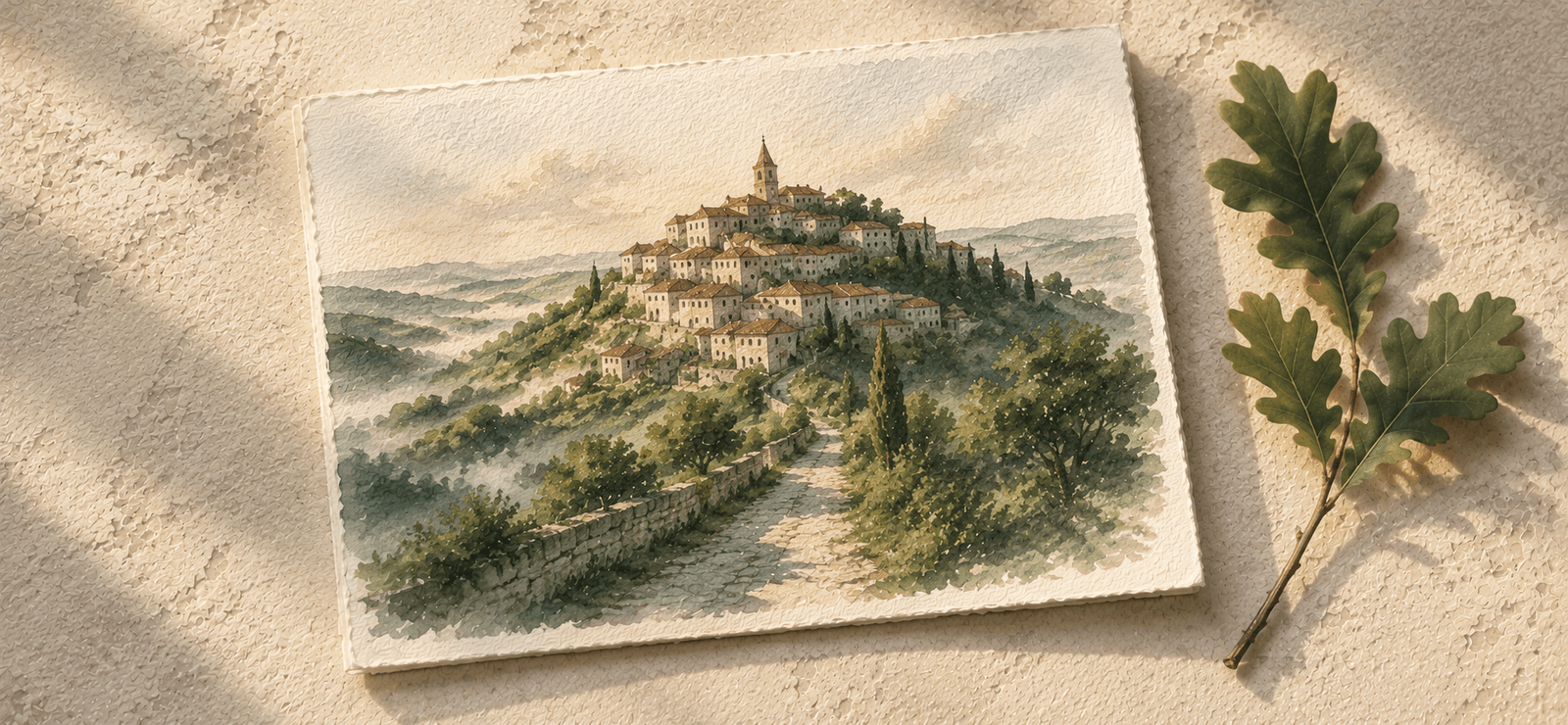
The marketing line every premium DMC has heard about Istria is "the Tuscany of the Adriatic." The comparison sells the destination quickly to clients who've done Tuscany — hilltop towns, vineyards, truffles, food culture, a slower register than Croatia's coast — and it conveys the right altitude of expectation for premium positioning.
The comparison is also misleading if used as the whole brief. Istria isn't Tuscany. It's denser, younger as a recognized premium destination, less ecclesiastical, more Italianate-on-the-coast-and-Slavic- in-the-interior. The food culture is more aggressive (truffles every season, olive oil at world-class competitive level, wine on a renaissance arc); the accommodations register is at a different stage of development; the supplier ecosystem is mature but younger than Dalmatia's.
For DMCs building Istria-focused trips, the Tuscany shorthand earns the inquiry. The actual trip design needs a more honest frame. This article is the honest frame.
Where Istria actually sits
Geographically: the heart-shaped peninsula at Croatia's northwest corner, bordering Slovenia in the north and opening to the Adriatic on three sides. Operationally: a 2-3 hour drive from either Ljubljana or Trieste, plus a 1.5h flight from most European hubs into Pula (the main airport).
Three concentric Istrias:
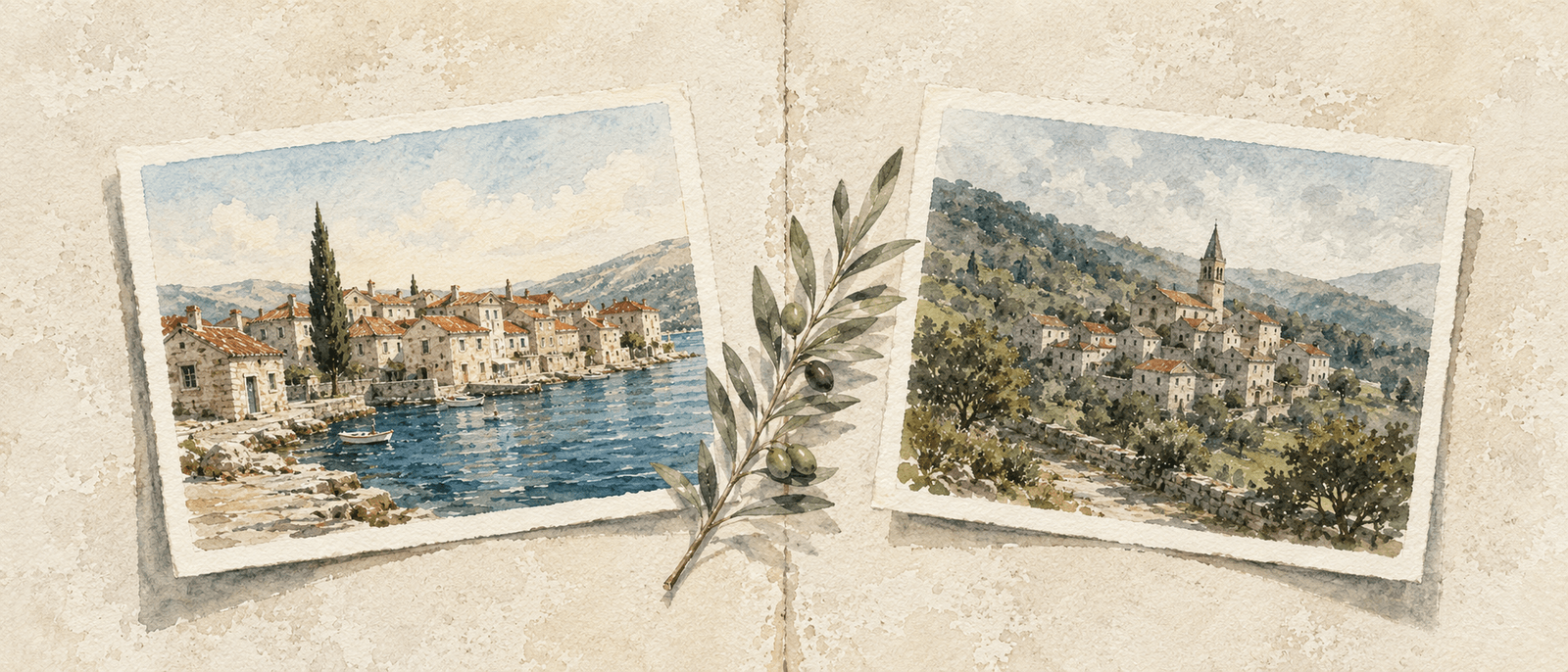
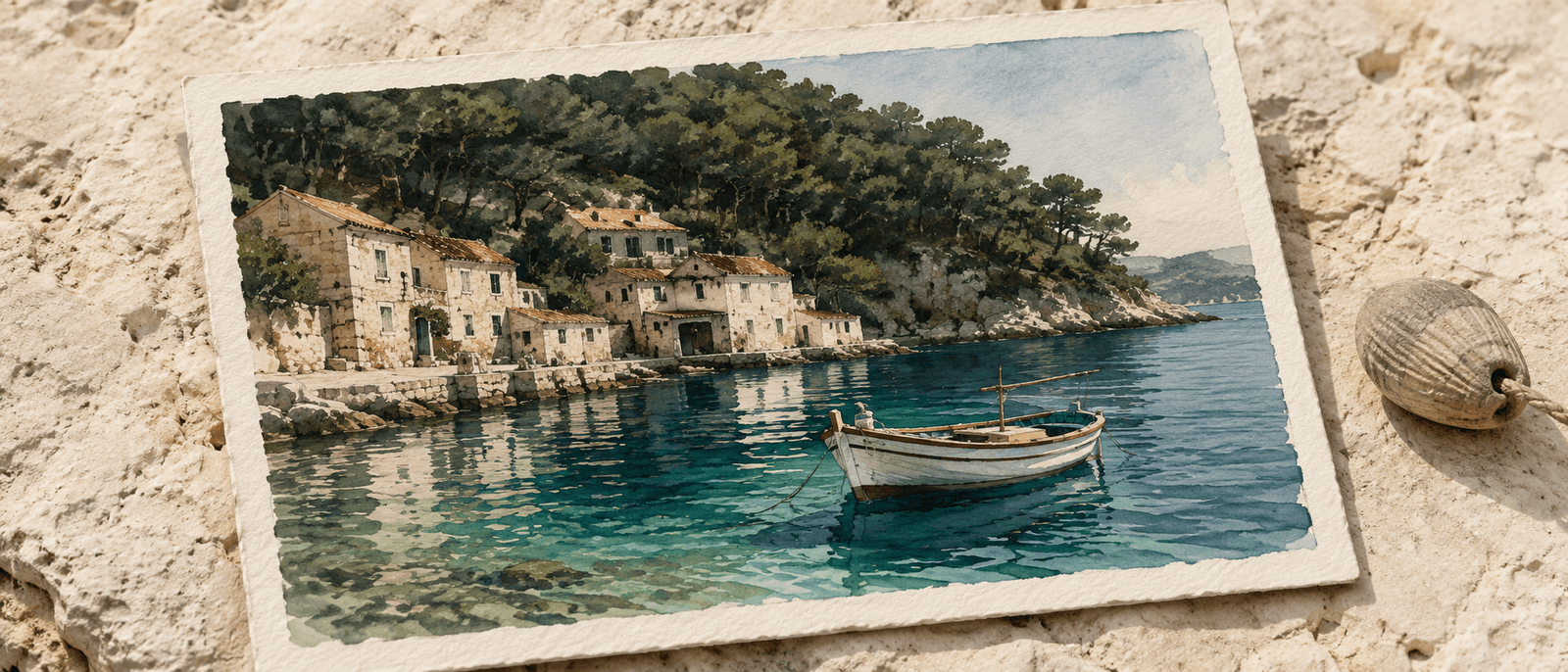
- Coastal Istria (the perimeter). The fishing towns on the west coast (Rovinj, Poreč) and the east coast (Rabac). Italianate architecture, sea-view dining, traditional resort positioning. Most-visited tier; mature supplier network; some areas getting touristy.
- Hilltop interior (the central spine). Motovun, Grožnjan, Hum, Buzet — small medieval hilltop towns with the strongest food/wine concentration. The 'Tuscany comparison' lives most accurately here. Less developed than the coast; more authentic.
- Northern Istria (the agricultural belt). Sloping farmland, scattered villages, a quieter version of the hilltop region. Better for clients seeking maximum quiet; less tourist infrastructure.
A premium 6-7 day Istria trip typically combines all three: 2 nights coastal (Rovinj is the default), 3-4 nights interior hilltop, optional 1-2 nights northern agricultural. Pure-coastal Istria trips work but underuse the interior's differentiation; pure- interior trips work for very specific clients but skip the iconic coastal towns most clients want to see.
How Istria actually differs from Tuscany
The scale
Tuscany is a region the size of Wales. Istria is a peninsula 80km long and 60km wide. A two-week Tuscany trip can cover a fraction of the region; a two-week Istria trip overshoots — most premium Istria trips are 4-6 nights, not 10-14. The compactness is a feature: driving distances are small (Rovinj to Motovun is 45 minutes), so a single-base trip with day-trips works where Tuscany typically requires multiple bases.
The architecture vocabulary
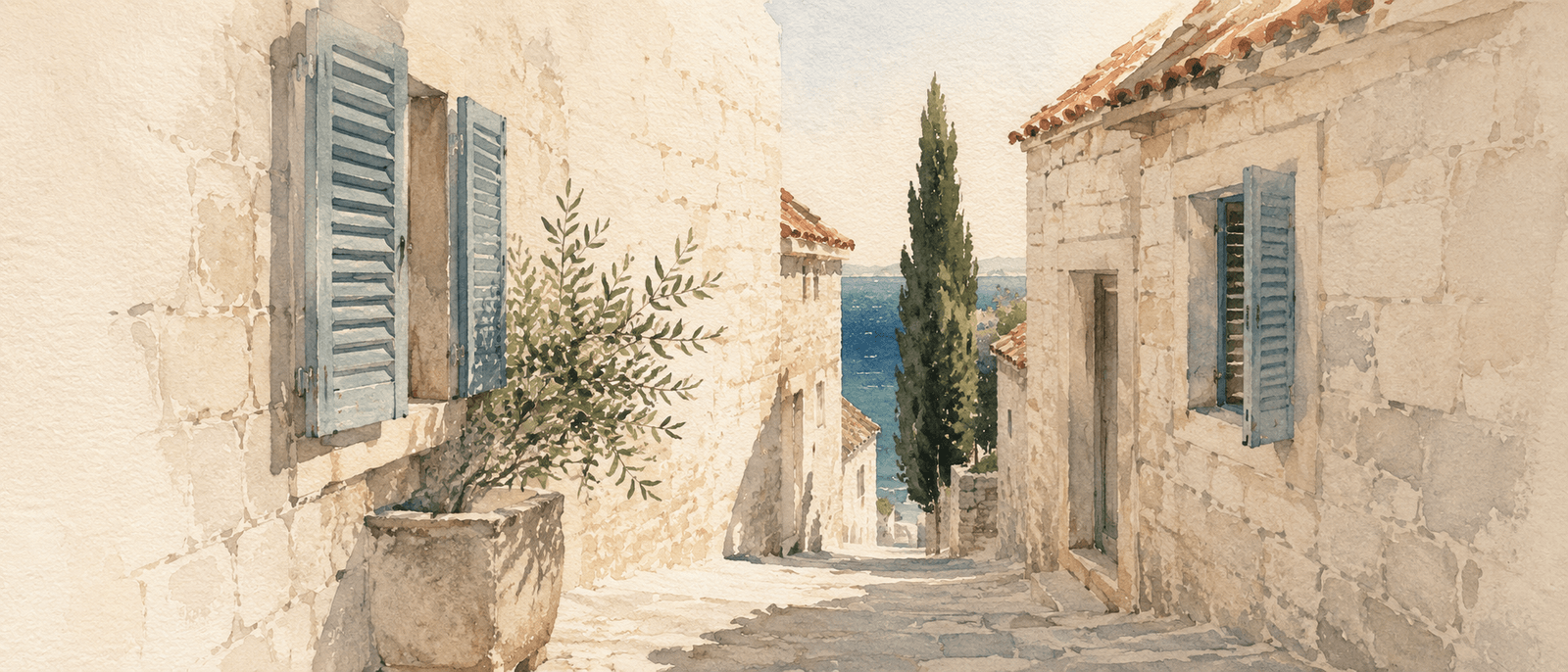
Tuscan towns are predominantly Romanesque-Renaissance, with characteristic stone construction, terracotta roofs, and walled medieval centers. Istrian towns are Venetian-influenced (Istria was a Venetian possession for centuries), with a different stone palette, smaller scale, more pastel facades on the coast and more raw stone in the interior. The Italianate read is real but stylistically distinct.
For the client who specifically wants the Tuscan visual vocabulary — the duomos, the campaniles, the Renaissance-era frescoes — Istria's offering is slimmer. Pula has the spectacular Roman arena and Italian-built fortifications; Rovinj has the bell-towered old town overlooking the Adriatic; the hilltop villages have small Romanesque churches. Beautiful, distinct, not Tuscan.
The food register
This is where the comparison most overshoots in either direction:
- Tuscany's food culture is mature and standardized
- The Tuscan menu is largely the same in 50 restaurants — ribollita, pappa al pomodoro, bistecca, pici. The execution varies; the framework is fixed.
- Istria's food culture is younger and more diverse
- The cuisine fuses Italian (Venetian) with Slavic with Mediterranean — fuži pasta, manestra (a hearty soup), boškarin beef (a heritage breed nearly extinct then revived), truffle-everything, the cheese-and-prosciutto board (pršut), the seafood register on the coast.
- Truffles in Istria operate at a different scale
- Tuscany has truffles (mostly the white variety in San Miniato). Istria has both white and black truffles in genuinely commercial volume; the Motovun forest is one of the few places in Europe where white truffles are commercially hunted at scale. Premium DMCs running food-focused Istria trips can put truffle-hunting on the itinerary as a working experience, not a tourist novelty.
- Olive oil is world-class
- Istria's olive oils have won Flos Olei's top-region ranking multiple years. The visit-the-producer experience is genuinely premium — small family operations, harvested-and-pressed-on-site, vertical tastings.
- Wine is on a renaissance arc
- Malvazija (white) and Teran (red) are the indigenous varieties, both surging in quality through the last 15 years. The wine route through Istria connects 30+ producers; the premium tier (Coronica, Trapan, Roxanich, Kabola) is operating at international comparable level.
The pace
Both regions are slower than coastal Mediterranean trips, but the rhythm is different. Tuscany's pace is contemplative — sitting on terraces, looking at cypress avenues, listening to the wind. Istria's pace is more active — driving the wine roads, walking hilltop village streets, paddling the small fjords on the coast. Closer to a hiking-and-tasting trip than a contemplative-villa trip.
Right-fit signal: client wants quiet contemplation → Tuscany. Client wants active tasting and varied experiences in a small geographic radius → Istria.
The premium properties in Istria
The hotel ecosystem is real but younger than Dalmatia's. The shortlist for premium clients:
- Maistra's Grand Park Hotel Rovinj. On the Rovinj seafront; the flagship five-star coastal property in Istria. The default choice for coastal Istria stays at the premium tier.
- Hotel Adriatic (Rovinj). Boutique heritage property in the old town; smaller scale than the Grand Park; more in-town feel.
- Meneghetti Wine Hotel (interior, near Bale). Restored estate property with vineyards. Premium destination-hotel positioning. Often the right base for wine-focused trips.
- San Canzian Village & Hotel (interior, near Buje). Restored medieval hamlet converted to a small luxury hotel. Closer to the Slovenian border; very quiet.
- Villas in the interior. The strongest premium offering in interior Istria is increasingly private villa rentals — restored stone houses with pools, often individually-owned and managed through small agencies. Best for clients of 4-8 people looking for a base.
What's missing relative to Tuscany: the long inventory of agriturismo (working-farm-as-accommodation) properties at premium register. Tuscany has hundreds; Istria has a small handful. The premium DMC working Istria often uses villas to fill this gap.
The seasonal calendar — slightly different from Dalmatia
Istria's premium window stretches longer than Dalmatia's in both directions:
- April-May
- Mild, lush, truffles still in season (the spring truffle is the smaller-scale Tuber aestivum). Less swimming-dependent than Dalmatia, so the cooler temperatures matter less.
- June-September
- The peak. Truffles, wine, beach time on the coast, all working. July-August has tourist density on the coast (Rovinj, Pula) but less than Dubrovnik or Split.
- October-November
- White truffle season (the big one — Tuber magnatum pico from October through January). One of Istria's most distinctive seasonal windows. The interior is at its visual peak (autumn colors); the coastal experience winds down.
- December-March
- Most coastal operators close. The interior keeps a small premium operation going through white-truffle season. Not for swimming or coastal experiences; very specific for food-focused trips.
The DMC route into Istria looks materially different from a Dalmatia recommendation. For a client whose ask is "September Mediterranean trip," you'd recommend Dalmatia for warm-sea + sailing energy or Istria for cooler-but-richer food experience. Different trips, different premium positioning anchors.
What works as a 6-night Istria trip
A typical structure:
- Days 1-2 — Rovinj. Arrival at Pula airport, transfer to Rovinj (30 min). Two nights in the coastal town — wander the old town, dinner overlooking the harbor, half-day boat or kayak through the small fjords offshore, lunch at one of the seaside restaurants.
- Day 3 — transition to interior (Motovun area). Drive into the interior with stops along the way (lunch at a wine producer; brief stop in Bale or Sveti Lovreč; arrive in Motovun mid-afternoon).
- Day 4 — Motovun base, food day. Truffle hunt in the Motovun forest in the morning (a real experience: walk with the hunter and the dog through the truffle area, learning the harvest process). Lunch focused on truffle-everything; afternoon at a vineyard or in the village itself; dinner at one of the interior restaurants.
- Day 5 — Northern Istria + wine. Day-trip through the wine roads toward Buje and the Slovenian border. Visit 2-3 premium producers; lunch at a working farm; back to base for dinner.
- Day 6 — final coastal moment + departure prep. Drive south through Pula — visit the Roman arena, late lunch at the airport-area restaurant or in Rovinj — flight out late afternoon.
6 nights, 7 days. Multi-base structure works because driving distances are short. The trip pairs well with a parallel Dalmatia week or a parallel Slovenia week (Ljubljana + Lake Bled are 90 minutes from the northern border).
Common mistakes
Selling Istria as a Tuscany substitute
The Tuscany shorthand earns inquiries; it shouldn't shape the trip. Clients expecting San Gimignano and Brunello come away mildly disappointed because Istria isn't San Gimignano and Brunello. The DMC's job is to manage the expectation reset between inquiry and proposal — frame Istria as its own destination, not as a budget Tuscany.
Over-coastal-weighting
Istria trips that are 5+ nights coastal and 1-2 nights interior under-use the destination's differentiation. The interior is where Istria distinguishes from any other Mediterranean coastal trip. A 50/50 split (2-3 coastal, 3-4 interior) is almost always the right balance.
Treating Istria as a destination for first-time Croatia visitors
First-time Croatia visitors generally want Dalmatia. The iconic imagery is there (Dubrovnik, Hvar, the Adriatic islands). Istria is structurally a better fit for the second-time Croatia client, or the client who's done Italy/Tuscany and wants something close-but-different. Selling Istria as the first-Croatia-trip is fighting the client's mental image.
Underestimating the food intensity
Istria food culture is dense. A standard 4-5 night interior trip can fit 2-3 truffle meals, 2 wine tastings, 1-2 olive oil tastings, 4-5 multi-course dinners. Premium clients tend to enjoy this — but the intensity needs to be paced. Building a trip where every meal is a tasting menu is exhausting for clients; spacing is part of the curation.
The combination-trip question
Many premium clients ask about combining Istria with Dalmatia. The answer:
- 8+ nights: yes
- Worthwhile. 4 nights Istria + 4-5 nights Dalmatia produces two genuinely different trips inside one calendar. The transit between (drive Pula→Split, or fly via Zagreb) takes 4-6 hours but is absorbed cleanly.
- 6-7 nights: probably no
- Cramming both produces a transit-heavy trip that under-delivers on either. Pick one for these durations.
- 10+ nights: definitely yes, with cross-border options
- 10+ nights opens the door to Istria + Dalmatia + Montenegro or Istria + Slovenia + Dalmatia. The longer canvas lets the regional differences register.
For the 8-night combination trip, the structural choice is Istria first (the interior register settles the client) and Dalmatia second (the coastal register builds energy). Reversed order works less well — the Dalmatian coast's energy doesn't flow naturally into Istria's slower interior pace.
The short version
Istria is a real premium destination but not the Tuscany its marketing suggests. It's denser, more food-focused, more active in pace, and structurally a second-Croatia-trip destination rather than a first-Croatia-trip one. Premium structure is multi-base (Rovinj + a hilltop town) over 6 nights, with the interior balanced equally with the coast. Truffles, olive oil, and wine are the food anchors; the architecture is Venetian-influenced (not Tuscan); the property ecosystem is younger than Dalmatia's but real. Don't combine with Dalmatia in trips shorter than 8 nights.
The DMC who frames Istria honestly — Tuscany's quick-sell line at the inquiry, the more accurate frame at the proposal — produces trips that match client expectations and earn the "this was different from what I thought, in a good way" response that drives premium retention.